Categories
Insulators Manufacturers Insulator Suppliers

An Ultimate Cheat Sheet on The Working Principles of Insulators

Do you know how insulators work? If not, then this ultimate cheat sheet on the working principles of insulators will help you to learn so. Let’s explore some quick facts associated with insulators.

If you want to buy effective insulators, look no further than contacting us, the best solid core insulators manufacturer in town.

Insulators refer to devices whose main function is to create insulation. An insulator is an electrical device that contradicts the electricity flow in a circuit. The insulators can resist the motion of the electrons, which makes them ideal for different electrical applications.

For this reason, people use them as a protection device in specific circuits with high currents.

Definition of Insulators

An insulator is a device that doesn’t enable electricity, sound, or heat to flow through it. Insulators don’t enable electrons, heat, or sound waves to pass through them.

The electricity needs a flow of electric current. For this reason, insulators are important to safeguard electrical devices from the harmful effects of electricity. Schedule a meeting with a well-known shaft insulator manufacturer to buy top-grade insulators.

Origin of Insulators

In early times, glass and ceramics were the materials that offered insulation. But ceramic materials didn’t perform very well with time. For this reason, non-ceramic polymer insulators came into the market.

The Telegraph Lines were the first electrical network that put insulators in use. With advancements, insulators have started to appear in different forms, shapes, materials, and devices.

The Most Common Electrical Insulators Materials

The most common insulator materials are the following:

  • Glass insulators
  • Porcelain insulators
  • Polymer insulators
  • Rubber insulators
  • Ceramic insulators
  • Foam insulators
  • Mica insulators
  • Silicone insulators

Working Principles of Insulators

Are you eager to know how insulators work? No worry, as we are here to help you understand the facts. Feel free to contact us for any information, as we are one of the renowned electrical insulator manufacturers in India.

To know the working principles of an insulator, it is important to observe the energy band structure of an insulator. The energy band structure of an insulator includes two parts. One is the valence band, and the other is the conduction band.

Valence Band: Valence bands contain valence electrons, and the conduction band is responsible for conduction. The gap between the conduction and valence band is the forbidden energy gap. The electrons must cross that part from the valence band to the conduction band.

The Valence band is the outermost band in the entire energy band structure. The electrons present in this band are Valence electrons.

Conduction Band: The conduction band is another part of the energy part. When free electrons evade their Valence band, they become free from the atom and enter the conduction band.

The electrons need to achieve adequate energy to cross the forbidden energy gap. In an insulator material like wood, the energy gap is so big that it’s impossible to cross it. The depletion width is so large that the electrons can not cross it. Hence there will be no flow of current.

To buy your preferred insulators, get in touch with popular electrical insulator manufacturers in India.

Just opposite to insulators, the energy gap is very small in conductors. For this reason, the insulators can easily cross the gap, creating efficient electron flow for electricity generation. So, in this way, insulators withstand the current flow.

FAQs

What is the meaning of electrical insulators?

A. Electrical insulators are components that resist electricity.

How do insulators function?

A. Insulators prevent electron flow and offer high resistance and low thermal conductivity.

What are some common properties of insulators?

A. Some common properties of insulators are high resistivity, thermal resistance, high mechanical strength, high dialectic strength, etc.

Conclusion!

From the above discussion, we can conclude that the insulators are the components that resist electricity flow. Hence different electrical networks use insulators to determine the adverse effects and damage of the current flow. Insulators are ideal for all, whether it’s prevention of current leakage, safety purposes, or insulation.

So what are you waiting for? Contact Reliance Potteries now to buy your preferred insulator. Being a top shaft insulators manufacturer, our wide collection of effective insulators can meet any need of your business. You are just a call away from receiving high-quality insulators.

Direction: Click Here

Categories
Insulator Suppliers

The Practical Guide To The Advantages of Pin Insulators

Positioned on the poles, insulators are those components that aid the transmission lines. Hence, they should include features like high electrical resistance, mechanical strength, and relative permittivity. Contact a reputable solid core insulators supplier to buy a wide range of superior quality insulators.

Pin insulators are a very common yet effective type among different types of insulators. If you are eager to know about the advantages of pin insulators, this practical guide will help you. Let’s discover some interesting facts together.

What are Pin Insulators?

Pin insulators are those which hold great importance in electrical distribution networks. These insulators can have an orientation in a vertical or horizontal alignment. They need minimal maintenance for optimal performance. These insulators include a groove to aid the bolt or pin.

Benefits of Pin Insulators

Some very common advantages of pin insulators are the following. Want to buy authentic pin insulators? Look no further than contacting a renowned shaft insulator manufacturer.

Prevent Electrical Shocks:

The first advantage of pin insulators is their capacity to prevent electrical shocks from circuits. These insulators isolate the conducting components from the electrical networks. It ensures almost zero electrical shocks to any individual.

Zero Wastage of Energy:

Another great advantage of pin insulators is almost zero wastage of energy. But how? Let us tell you in the simplest way. Insulators are those components that resist the current flow in an unintended path direction. It means zero wastage of energy. For this feature, pin insulators are the main component in transmission lines.

Effective Thermal Insulation:

Do you know the main advantageous feature of pin insulators? It’s nothing but their capacity to offer effective thermal insulation. Are you searching for top-grade pin insulators? Then contact an electrical insulator manufacturer in India today.

Due to their notable insulation features, pin insulators are essential in controlling heat transfer from the device. They also play a great role in maintaining a certain equilibrium temperature in the electrical network.

Beneficial Dialectic Properties:

Many of us don’t know that pin insulators hold great dialectic features. For this reason, these insulators can function as inside insulators and effective storage elements. For this specific feature, pin insulators can store the electric field.

Versatility:

Versatility is a feature that makes the pin insulators different from all other insulators. There are different types of pin insulators available depending on the materials. Such as ceramics, rubber, glass, plastic, fiber optics, etc. Each of them has specific benefits and applications in daily-use equipment.

Some Drawbacks of Pin Insulators

Though pin insulators are highly effective for any electrical network, they also have drawbacks. What are they? Let us help you understand. In case of any queries about the insulators, feel free to ask any electrical insulator manufacturers in India.

  • Pin insulators are ideal only for transmission lines.
  • The voltage rating is up to 36 KV.
  • Pin insulators can harm the thread of an insulator.
  • For voltage ratings above 50KV, pin insulators will become bulky and uneconomical.
  • One must use these insulators by the spindle.

Applications of Pin Insulators

The very common applications of pin insulators are the following:

  • Pin insulators find their most uses in power transmission lines for upto 33KV.
  • Intermediate poles on a straight run always include pin insulators.
  • In many electrical networks, one must use a pin insulator instead of two suspension insulators. To buy the best quality pin insulators, get in touch with a famous Solid Core insulator supplier.

FAQs

Why are pin insulators not applicable for a voltage rating of above 33KV?

A. Pin insulators are not ideal for a voltage rating of above 33KV. It’s because they become too big and uneconomical for such applications.

Why insulators are necessary for electrical networks?

A. Insulators are mandatory for electrical networks as they offer protection against heat, waves, and the flow of electricity. To get the latest technology in electrical insulators, talk to the expert members of any shaft insulators manufacturer.

Final Words!

So, these are some crisp facts associated with pin insulators. Contact Reliance Potteries if you want to buy high-quality pin insulators at an economical rate. All our insulators contain optimal quality and the latest technology design. Shop with us now and get exciting offers on each purchase.

Direction: Click Here

Categories
ESP Insulators Manufacturer Insulator Suppliers

The Expert’s Guide To The Features of Pin Insulators

The pin insulators play a vital role in the entire power system. They ensure reliable and safe distribution and transmission of electricity. The pin insulators are the most significant among the different types of insulators. But why?

It is due to its unique properties and design. Do you want to know some interesting features of pin insulators? Then, read this expert’s guide to the features and types of pin insulators. To buy high-quality pin insulators, contact any reputable insulator suppliers in India.

What is A Pin Insulator?

Pin insulators are ideal for overhead power distribution and transmission lines. They can insulate and support electrical conductors from grounded structures.

These insulators contain top-notch porcelain and composite materials. Hence, they offer extraordinary mechanical strength and electrical insulation properties. Below are the two common types of pin insulators:

Porcelain Pin Insulators

Porcelain pin insulators are the most used insulators in different electrical networks. These insulators contain high-strength porcelain. Hence, they offer extraordinary mechanical strength, resistance and insulation.

These insulators are resistant to electrical and thermal stress. Porcelain pin insulators are available in different designs. Such as cap and pin, spindle, and Shackle insulators. Each of these types has specific uses. They can accommodate different installation needs.

Composite Pin Insulators

The next notable type of pin insulator is a composite pin insulator, also known as a polymer pin insulator. Composite pin insulators are a great alternative to porcelain insulators. They include silicone rubber housing and high-strength fibreglass rods.

These insulators offer comparable insulation performance to porcelain insulators. They are more lightweight and contain higher mechanical strength. They have superior vandalism resistance and include greater mechanical strength.

Features of Pin Insulators:

Are you searching for top-notch insulators? Then look no further and contact any ESP insulators manufacturer in India.

Below are some salient features of pin insulators. These features make them appropriate for any electrical network.

Mechanical Strength

The first salient feature of pin insulators is their mechanical strength. Their unique design withstands certain stresses caused by wind. They also can resist factors like conductor tension.

Extraordinary Electrical Insulation

Most pin insulators contain high dialectic strength. It ensures effective electrical insulation with zero chances of leakage.

Corrosion Resistance

Both types of pin insulators have great resistance against corrosion. This feature ensures prolonged lifespan and reliability.

Temperature Resistance

Another significant feature of pin insulators is their extraordinary temperature resistance. These insulators can withstand high operating temperatures. For doing so, there is no need to compromise their insulation properties. This makes them a suitable choice for different situations.

Self Cleaning

Did you know that pin insulators have specific surface properties? They enable self-cleaning by shedding pollutants, dust, and other contaminants.

It ensures the continual effective performance of these insulators. Are you looking forward to buying a wide range of pin insulators at a reasonable price? Contact a well-known insulator supplier in India like us.

Conclusion!

These basic features make pin insulators appropriate for different uses. We at Reliance Potteries strive to deliver a beneficial range of insulators. All our products are reasonable and quality-tested.

We are providers and aggregators of effective insulators. Contact us as soon as possible to receive exciting offers.

Direction: Click Here

Categories
Insulator Suppliers shaft insulators

The 5 Mind Blowing Facts About Shackle Insulators

The entire power transmission line depends on different types of insulators. Do you know how many types of insulators are on the market? If not, then ask us. As a top shaft insulators manufacturer, we can answer all your queries. Below are the most common types of insulators.

  • Suspension insulators
  • Pin insulators
  • Solid core line insulators
  • Bushing insulators
  • Stay insulators
  • Post insulators
  • Shackle insulators
  • Guy strain insulators

Suspension and Shackle insulators are ideal for medium to high-voltage networks. Stay and Shackle insulators are perfect for low-voltage networks. So, let’s know the 5 mind-blowing facts about shackle insulators.

Basics of An Insulator

Insulators are important in an entire electrical network. They can prevent surplus electricity flow towards the earth to the conductors. Insulators are vital devices in the entire power system. The main reason behind this is their immense resistance.

What are Shackle Insulators?

Shackle insulators hold importance in low-voltage distribution networks. The other name for these insulators is spool insulator. Shackle insulators can function in both vertical and horizontal positions. This type of insulator needs underground cables for distribution purposes.

For this reason, these insulators are now less in use. Shackle insulators include a tapered hole. It makes the load distribution more consistent. These insulators are less prone to fracture for this reason. Shackle insulators contain a conductor within the groove.
To know more about these insulators, get in touch with a renowned shaft insulator manufacturer.

The Construction of Shackle Insulators

Shackle insulators are round and have a hole in the centre for bolting. Both sides of these insulators include a 25mm wide galvanised plate. The pole region of these devices contains the other sides of the plates. The soft binding wires help secure and attach these insulators.

Shackle insulators are more effective than strain insulators. Shackle insulators are available in three sizes. Such as 50 mm x 65 mm, 75 mm x 90 mm & 100 mm x 115 mm. Among these sizes, 50 mm x 65 mm is ideal for low-voltage distribution networks like residential facilities. The other two are applicable for high-voltage main lines.

Components of Shackle Insulators

Shackle insulators contain two major components: porcelain and aluminium silicate. The other essential elements are plastic kaolin, quartz, and feldspar. Most porcelain bushing manufacturers in India use these elements in their insulator manufacturing units.

Uses of Shackle Insulators

The most common uses of shackle insulators are the following:

  • Shackle insulators find their most uses in the power distribution system. It is better to arrange them in between the conductors and the towers. It can offer better insulation and support.
  • Overhead lines with medium and low voltage contain shackle insulators.
  • Many electrical poles include shackle insulators and a bolt to outflow current from the conductors.

Boons of Shackle Insulators

Do you know why shackle insulators are popular in the electrical sector? Read the points below:

  • Shackle insulators are a great support to the conductors.
  • These insulators can fulfil all the requirements of electricity.
  • They are ideal for use in both vertical and horizontal positions.
  • Shackle insulators are the best choice to maintain safety in different electrical devices.

To learn more about these advantages, contact a reputable porcelain bushing manufacturers like us. We are always there to help.

Conclusion!

Thus, this is all about shackle insulators. We highlight all the necessary facts about these insulators. Such as the basic idea, uses, components, benefits and construction. If you find this article helpful, share it. Please share your suggestions with us, as Reliance Potteries values it. Get in touch to get free quotes on our extensive range of insulators.

Direction: Click Here

Categories
Insulator Suppliers ESP Insulators Manufacturer

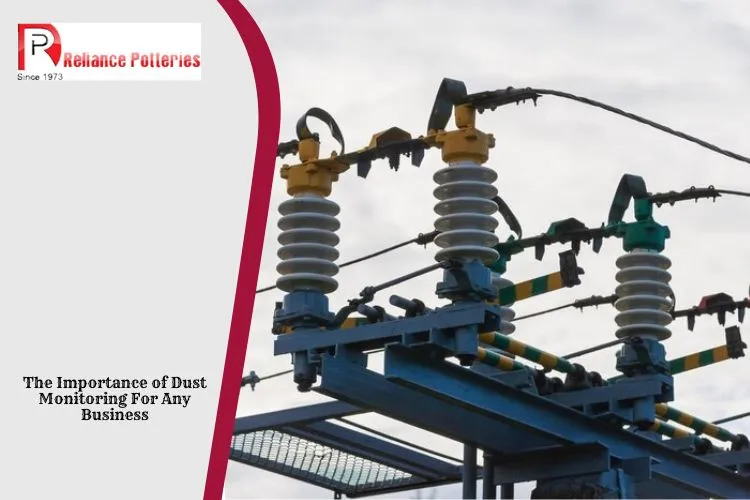
The Importance of Dust Monitoring For Any Business

What is the importance of dust monitoring for any business? Dust formation is an inevitable part of any commercial facility. Dust particles exist everywhere. From massive manufacturing plants and construction sites to peaceful office setups. The formation of dust particles depends on certain factors. Hence, there are a wide range of dust particles depending on the sizes. There are so many of them, from microscopic to evident to the bare eyes.

Carving wood, stacking air, and molding plastic can lead to impurities in the air. For this reason, regular dust monitoring is a mandatory safety and health concern. Handling dust in an office setup is essential. There are many reasons behind this. Such as maintaining the safety of the employees and retaining productivity.

Dust and other pollutant can affect the human respiratory system. It provokes asthma and other potential problems. Hence, dust monitoring is crucial to ensure your business’s efficacy. This blog will discuss some facts. They will help us understand why dust monitoring is crucial for any business. Contact an ESP insulators manufacturer in India to learn more about dust monitoring.

The Need For Dust Monitoring:

Dust monitoring is important for businesses in certain industries to ensure workplace safety. It includes recording a systematic measurement of airborne particles. The main purpose of this system is to prevent particles from polluting indoor and outdoor air. Those particles can create serious health hazards if inhaled over a long period. Below are some reasons why dust monitoring is necessary.

Safety & Health

The first reason dust monitoring is vital is safety and health. Inhaling harmful airborne particles can lead to serious respiratory diseases. Such as allergies, lung diseases, and cancer. Thus, using an ESP insulator is mandatory to protect workers’ safety and health. The use of ESP insulators lessens the threats of occupational diseases.

Environmental Safety

The next notable consideration is environmental safety. Different job sites release harmful dust particles into the environment. It creates pollution and a harmful ecosystem. The right usage of ESP insulators lowers the environmental damage. Using an ESP insulator also specifies a commitment to sustainability.

Better Productivity

Do you know excessive dust formation can affect the productivity of any business? Dust particles can lessen sight and machine functioning. It may lead to hazardous working situations. The use of the right ESP insulator can improve both functionality and visibility. It results in higher productivity with less downtime.

Quality Control

In certain industries, dust particles can harm the quality of the products. Proper dust management prevents this issue and helps produce quality goods.

Duties Towards The Surroundings

Excessive dust formation can create a harmful atmosphere for the adjacent population. Using a dust control system can benefit those people in such a context. Using a proper dust monitoring system shows a sense of responsibility toward the neighborhood. It contributes to a better relationship with others. Buy premium ESP insulators from reputable insulator manufacturers in India.

Final Thoughts!

These are some basic facts that depict why regular dust monitoring is crucial. These points show why different industries use ESP insulators. Are you also running a factory, manufacturing unit, or commercial space? Buy high-quality ESP insulators from us.

Why choose Reliance Potteries when it comes to ESP insulators? We are one of the most reliable names in town. Our comprehensive range of insulators can fulfill any of your needs. What distinguishes us? The latest technology, advanced testing methods, high-quality raw materials, and effective team management. Call us or send an email to learn more.

Direction: Click Here

Categories
Insulator Suppliers Transformer Bushings Manufacturer in India 

Sectors Where the Electrical Insulators Are Used

Electrical conductors and electrical insulators are not the same thing. Materials that easily conduct electricity are called electrical conductors. Stated differently, they facilitate the easy passage of charges through them. That is why they have been widely used in various sectors. If your sector needs some high-voltage equipment for the electrostatic precipitator, then shaft insulators are just the solution. You can get them from the best Shaft Insulators Manufacturer near your location.

Are you also eager to learn about the sectors where electric insulators are used? Then, stay until the end of the article, as we are here to discuss that in detail. So, let’s start the topic without further delay.

Various Sectors the Electrical Insulator Is Used

Power generation sector:

Switchgear, transformers, and generators must all be protected to avoid electrical failures and guarantee safety while operating at high voltages. They ensure that high-voltage components are properly segregated and avoid other system components or the earth. This sector also needs Porcelain Bushing, and you should get it from Porcelain Bushing Manufacturers so that it can work perfectly.

Telecommunication:

These robust buildings are essential to telecom towers because they support and insulate communication cables and antennae, guaranteeing the equipment’s safety and dependable signal transmission. Similarly, data centers employ these structures to safeguard delicate equipment, guaranteeing a steady power supply and peak efficiency.

Power transmission and distribution:

Supporting and shielding high-voltage power lines from transmission towers will ensure their efficiency and safety. This will avoid electrical leaks and preserve the system’s integrity. The insulators are carefully selected according to the voltage levels and climatic circumstances. They might be constructed of porcelain, glass, or composite materials. Additionally, they are used on utility poles to isolate power wires from the ground and the poles themselves, lowering the possibility of short circuits and promoting worker safety.

Residential and commercial buildings:

This essay highlights how crucial it is to protect home and commercial electrical wiring to avoid electrical fires and short circuits. It also emphasizes how electrical lines should be shielded from environmental elements and physical harm. It also covers employing these safety precautions in lighting fixtures to guarantee secure operation and avert electrical problems.

Transportation:

Insulators are essential for supporting the power cables in electrified railway systems, which supply electricity to the trains. Additionally, they provide insulation for the electrical parts of control and signaling systems. Furthermore, by offering insulation for electric motors and battery packs, these insulators guarantee the safe functioning of electric cars.

Renewable emergency:

The text above discusses managing high voltages and preventing electrical problems in wind turbines by using insulating materials in generators and transformers. These materials are also used in solar inverters and cables to ensure safe operation and protect against electrical issues.

Electrical insulators are vital components of many enterprises because they guard against electrical risks, keep the power supply constant, and ensure the dependability and efficiency of electrical infrastructures. Insulators must be properly selected and applied to particular needs and environmental factors to guarantee optimum performance and safety.

Direction: Click Here

Categories
Porcelain Bushing Suppliers Insulator Suppliers

Learn The Extensive Types and Designs of Transformer Bushings

Transformer bushings play a vital role in ensuring effortless functioning of the transformers. They promote electricity flow as well as protect the tool from natural elements. Below is a short overview of extensive types and designs of transformer bushings.

Porcelain Bushing

The first transformer bushings type is porcelain bushings. It is one of the most widely used and oldest transformer bushing types. These bushings consist of high-quality porcelain. Porcelain is a material that is known for its mechanical and electrical strength. These bushings are ideal for high-voltage applications.

For this reason, anyone can operate these bushings at a temperature of 900°C. These bushings are used for outdoor applications with mechanical stress and high voltage Contact a transformer bushings manufacturer in India to buy the best quality bushings for any of your needs.

Oil-Filled Bushings

As the name indicates, oil-filled bushings use oil as an insulating element instead of porcelain. These bushings are comparably lighter and smaller than porcelain bushings. Like porcelain bushings, the user can operate oil-filled bushings at greater voltages.

The oil used in these bushings are either syntgetic oil or mineral oil. Both these oils offer better insulation and cooling properties. These bushings are used in circuit breakers, transformers, and other high-voltage devices.

Gas-insulated Bushings

The next category of bushing is gas-insulated bushing. These bushings utilise SF6 or sulfur hexafluoride as an insulating medium. These bushings can function at higher voltages in comparison with oil-filled bushings. The reason behind this is the excellent insulation properties and high dialectic strength of SF6 gas. These bushings are used in switch gears, transformers and other high-voltage elements.

Epoxy Bushings

Epoxy bushing is another effective option in the list which utilises solid insulating component. The insulating component this bushing is made up of epoxy. Epoxy is a component that has enormous moisture and chemical resistance. These bushings are ideal for transformers and switchgears.

Resin-impregnated Paper Bushing

Resin-impregnated paper bushing is a type of dry-type bushing that utilizes solid insulating components. The resin-impregnated paper insulating component of these bushings are eco-friendly and offer good insulation traits. Similar to epoxy bushings, resin-impregnated paper bushings are used for indoor applications like transformers and switchgears.

Hybrid Bushing

Hybrid bushings are a type of bushing that is a successful combination of gas-insulated and oil-filled bushings. These bushings have two part, lower part and upper part. These bushings use SF6 gas as an insulating medium for the upper part and oil as an insulating medium for the lower part.

In comparison to conventional regular oil bushings, hybrid bushings offer better reliability and performance. These bushings are perfect for high-voltage devices like circuit breakers or transformers. Buy excellent-quality hybrid bushings from reputable insulator suppliers in India.

Conclusion!

So these are some common examples of transformer bushings. We hope this article will help you choose the best transformer bushing for your need. Visit our site for more information.

Direction: Click Here

Categories
ESP Insulators Manufacturer Insulator Suppliers

A Checklist Before Approaching An ESP Insulator Manufacturer

The requirement and demand for ESP insulators are expanding with each passing day. The reason behind this is the enormous advantages it offers. ESP insulators are a pivotal part of several industries. So many manufacturing brands can deliver top-notch products as per your needs. But you must know the fundamentals before approaching those brands. So let’s have a quick look at the checklist before approaching electrical insulator manufacturers in India.

What Are The Different Categories of ESP Insulators?

ESP insulators vary in terms of shape, size, and use. You can select any among them as you need. Below is the list of the insulators used majorly in different industries.

  • Shaft insulators
  • Pin insulators
  • Cylindrical support insulators
  • Conical support insulators
  • Well-through bushing insulators

How do The ESP Insulators Function?

The ESP insulators utilize electrostatic powers to attract dust particles from the exhaust gas developed during several industrial processes. In these insulators, many DC high-voltage negatively charged discharge electrodes are placed between positively charged electrodes. Now, when polluted gas passes through the tube, the gas particles also become negatively charged.

Now, the collecting electrodes are stored in a dangling position. Then, the dust developed on the collecting electrodes is excelled by rapper insulators. There are hammers positioned beneath the electrodes inside the hopper. As the mechanical power is implemented, the
hammer-rapping motor removes the dust.

Where ESP Insulators Are Used?

ESP insulators are used in different power industries, such as oil-fired parts and coal power plants. ESP insulators are also a vital part of the industry where gas particles must be bushed. Such as cement plants, pulp industry, steel and iron plants, paper mills, glass factories, aluminum refineries, petrochemicals, etc. The demand for these insulators is increasing day to day after the companies use the once. Do you also want to use them? Then make sure of not keeping the temperature of electrical porcelain below 150°C. Always keep the insulators clean so that they can function well.

How You Should Approach An ESP Insulator Manufacturer?

While buying an ESP insulator manufacturer, always choose a reliable and reputable manufacturer. It is because ESP spare parts and insulators are used for crucial industrial procedures. Unless you get the top-quality products, the objective or purpose won’t be served. These insulators should last for longer years. The ESP support insulator supplier in India should have a stock of common designs that are used regularly in different industries.

The sellers should also have a stock of vital spare parts so that they can fulfill the requirements of their clients whenever required.

Conclusion!

So these are the fundamentals which everyone should know before approaching to an ESP manufacturer. We hope this article will help you in knowing the very basics related to the ESP insulators. Visit our site to purchase the best quality industrial-grade ESP insulators.

Direction: Click Here

Categories
Conical Support Insulators Manufacturer in India Insulator Suppliers

How to Choose the Right ESP Insulator for Your Project

Overhead utility wires and high-voltage circuits need insulation for safety. ESP insulators are vital for this. They prevent unwanted electricity flow from conductors or components. However, if you need conical support insulators to insulate electrostatic precipitator housings, you should buy them from a Conical Support insulators manufacturer in India. They can provide you with top-quality products for your project.

Finding the best ESP insulators may seem hard. But, you can find the right ones with thought. There are key factors to keep in mind that will guide you to the best ESP insulators. This article will help you get the best ESP insulators for your projects.

Tips For Getting The Best ESP Insulators

Get to know the environment:

Determining the temperature extremes that insulators will be exposed to is crucial. ESPs can operate at high temperatures. So, insulators must withstand these conditions without degrading. Considering the types of gases, particulates, and chemicals in the ESP environment is important. So, insulators must resist corrosion and chemicals. This is to keep their electrical and mechanical properties.

Check the strength and durability:

You must evaluate the mechanical stresses. These include vibrations and impacts. They stress the insulators. This evaluation is crucial to ensure they operate dependably. Choose insulators with strong strength. They can take these loads without breaking. Also, ensuring that the insulators keep their shape over time is vital. This is especially true when temperatures change. Maintaining correct alignment and the best functioning of ESP components requires this. If you want support for ESP insulators, get it from the best manufacturers of cylindrical support insulators for ESP, so it works perfectly.

Compliance:

The insulators must meet all relevant industry standards and regulations, such as IEEE and IEC, for electrical insulation properties, mechanical strength, and environmental resistance.

Electrical requirements:

The insulators you choose must have a voltage rating that is high enough. They need to handle peak voltage to keep your ESP system safe and effective. Insulators also need high dielectric strength to prevent electrical breakdown at high voltages.

Check the cost:

You must weigh the cost of the insulators at the start against their expected performance and lifespan. Remember, cheaper options require more upkeep and replacements and have shorter lifespans.

Manufacturer reputation and support:

Choose insulators from reputable companies with a solid record of producing high-quality products. Consider their excellent guarantee, responsive technical help, and convenience in finding new components.

Customizations:

Find out whether there are any special sizes or designs that will work with your particular ESP configuration. Have faith that the insulators can be safely installed in your system and that you know the installation criteria.

Select the material as well:

Because of its remarkable electrical properties and incredible mechanical robustness, porcelain is perfect for applications that need to be used in tough conditions with high temperatures. However, composite materials, such as fiberglass-reinforced plastic (FRP), are the preferred material when handling ease, and weight reduction is important due to their lightweight and corrosion-resistant nature. It is crucial to check that it satisfies the precise electrical insulation criteria for your ESP application.

By carefully weighing these variables, you can confidently select ESP insulators that will successfully fulfill your project’s mechanical, electrical, and environmental requirements. This will efficiently reduce insulator failure or degradation, resulting in optimal functioning and minimal downtime.

Direction: Click Here

Categories
ESP Insulators Manufacturer Insulator Suppliers

What Are Various Types of Insulators In the Market?

The electrical industry is filled with a wide range of innovations and inventions. The goal behind every electrical invention is to make things easy for humans. One such item is an electrical insulator. A substance that controls the flow of electric current is known as an electrical insulator. Its main purpose is to block electric charges. This stops the accidental transfer of electricity between conductive materials. Among all the other insulators, the ESP insulator is the trendy one. If you want to use it, then get it from the best ESP Insulators Manufacturer in India.

However, more insulators are available on the market than ESP insulators. What are those? If you are interested in gaining an idea about them, stay until the end of this article.

Different Variations of Insulators

Pin insulators:

Distribution networks frequently use this kind of insulator. It can tolerate voltages up to 11kV and is made of durable materials to resist heavy use. These relationships are presented in both vertical and horizontal orientations. This insulator’s simple design means that it experiences less wear and strain.

Stain insulators:

Its specs and operation vary slightly from suspension-type insulators, but they are comparable. It is used in an overhead transmission system. The strain insulator has a voltage capability of 33 kV. It is usually positioned in a bend in the transmission line but can also be put on an arm. To get more information or to use these insulators to suspend your electrical wire, get them from insulator manufacturers in India.

Suspended insulators:

These insulators are mainly used for medium—to high-voltage transmission lines. Their purpose is to shield the conductors from the supporting towers or structures and to support them. Suspension insulators are made up of many porcelain components connected in series by metal rods or links. They have two advantages: They are strong and can handle high voltages. The total flashover voltage rises when several units are connected in series. As a result, the insulator can withstand voltages between several hundred kV and 33 kV.

Ceramic insulators:

Glass and porcelain are two common ceramic materials used to make ceramic insulators. They are famous for their resistance to the environment. They are also known for their durability and electrical resistance. They use ceramic insulators. They are for power distribution, transmission networks, and other high-voltage applications.

Shackle insulators:

These insulators, which are small in size, are used in the overhead electricity distribution system. A metal strip can be used to connect this insulator. This insulator can be utilized in a bending or bending plus-turning arrangement, and it can withstand up to 33 kV voltages. These insulators are exclusively used in low-voltage transmission lines as strain insulators. It is possible to arrange the shackle insulators vertically or horizontally. These are supported by cross arms and bolted to the pole.

Stay insulators:

These tiny insulators are part of the overhead electrical distribution system. They can be connected using a metal strip. They can tolerate voltages of up to 33 kV and are useful in bending or bending plus turning arrangements. As of right now, strain insulators made of these materials are only utilized in low-voltage transmission lines. The shackle insulators can be positioned either horizontally or vertically. They are fastened to the pole with bolts and supported by cross arms.

There are various types of insulators available on the market.

Direction: Click Here