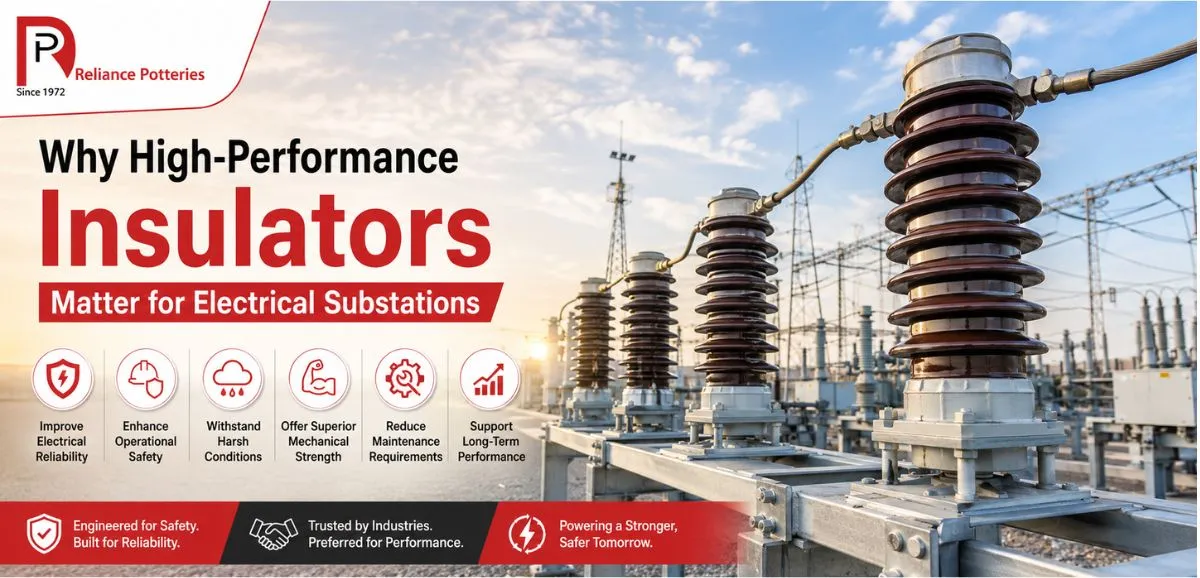

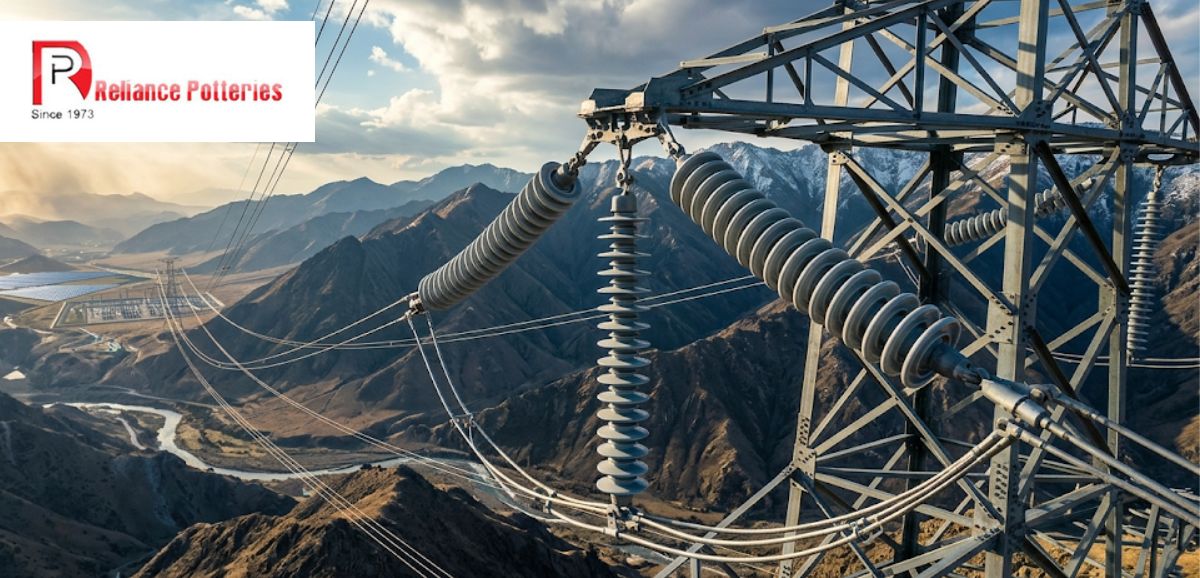
It is hard to imagine a day without electricity, and the reliability of the power supply system is becoming increasingly critical. As we all know, power transmission lines are the backbone of the power grid that carry electricity over long distances. Through the power transmission path, a minor disruption can cause major outages, financial losses, and safety hazards.
But thanks to the unconditional support of premium-quality insulators from trusted electrical insulator manufacturers in India, which are maintaining steady growth in this rapid electrification and infrastructure expansion.
According to a recent Google report, the global electrical insulator market was valued at over USD 12.5 billion in 2023 and is expected to reach nearly USD 18.37 billion by 2030.
Now read this blog to understand the key factors to consider when selecting top-notch quality insulation for transmission lines.
In this section, we will discuss the key factors to consider when selecting insulation for power transmission lines.
The most important factor for choosing an insulator for power transmission lines is the voltage rating. High-voltage and extra high-voltage lines require insulation that withstands extreme electrical stress.
Apart from this facility, insulators must prevent current leakage and ensure an uninterrupted power transmission. Transmission systems above 220 kV require high dielectric strength and long-term stability.
It is true that not all transmission power lines operate in a calm environment. Many are exposed to coastal salt pollution, industrial contaminants, heavy rainfall, and extreme temperatures.
In such scenarios, modern insulators must be selected based on environmental conditions. Polymer insulators work well in coastal areas, while ceramic insulators offer strong performance in stable environments.
Transmission lines are not just electrical systems; they are also mechanical structures. While choosing an insulator for a power transmission line, you must consider whether the insulator withstands wind pressure, vibration or mechanical stress.
For high-voltage transmission lines, suspension insulators are commonly used due to their ability to mate heavy loads.
An affordable insulator may not always be the right choice and may not be economical in the long run. Try to consider the frequency of maintenance of the insulators, the replacement cost of the insulators, and the expected lifespan.
In place of poor-quality insulators, composite insulators are gradually gaining popularity, offering longer service life in challenging environments.
Due to the rise of smart grids, the integration of renewable energy, and high-capacity transmission systems, insulation must be designed to accommodate dynamic load-bearing conditions for smooth energy efficiency.
If you choose a reliable drive insulator manufacturer, you will definitely experience a dynamic load-bearing capacity.
Different power transmission setups need different insulation systems. For long-distance overhead lines, urban transmission networks, and renewable energy connections, unique insulation solutions are required to meet specific requirements. It indicates the use of a customized insulation solution for unique power transmission line requirements.
Selecting an insulation system for power transmission lines is not about choosing an ordinary product. An effective insulation system ensures long-term reliability, safety, and efficiency for a smooth power network. At Reliance Potteries, you will get top-notch insulators that perform well in power transmission lines.