
Categories
Insulator Suppliers Insulators Manufacturers

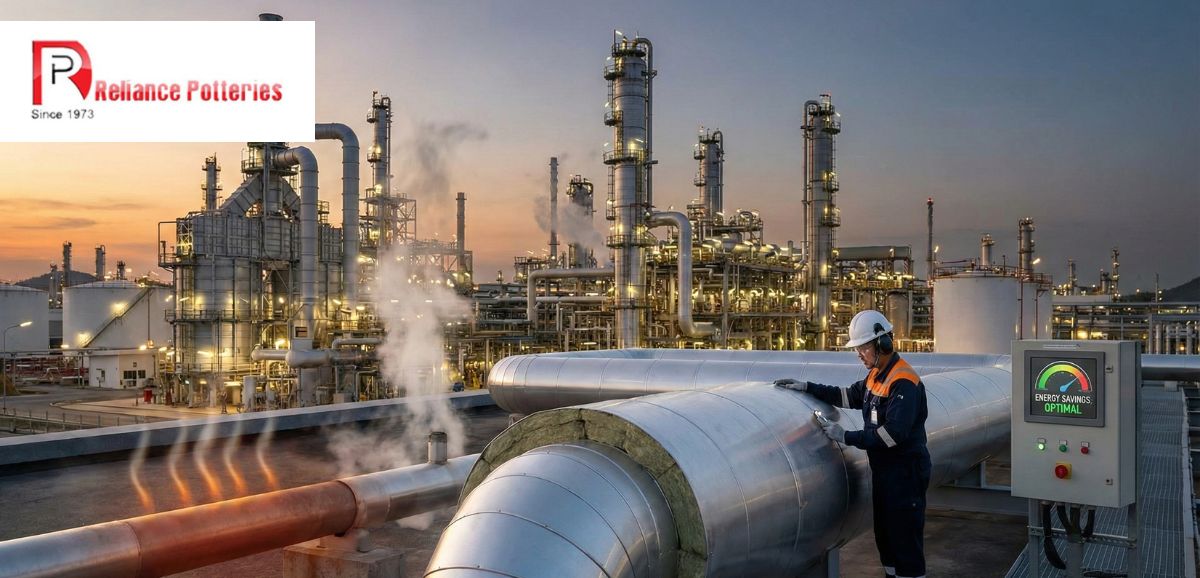
How Efficient Insulation Reduces Energy Use in Oil & Gas Plants

If you are dealing with oil and gas plants, you must consider energy efficiency. But why do you need to save energy consumption in an oil and gas plant? It is for cost-saving purposes. As we all know, oil & gas plants cost millions of dollars, and they require proper planning to reduce operational costs.

At this point, a silent hero, an insulator, works efficiently and has a major impact on energy-saving efforts. Whether it is an oil refinery or a petrochemical plant, an efficient insulator can significantly reduce operational costs and energy consumption.

Try contacting the top ESP insulator manufacturer in India to buy the most efficient insulator for oil & gas plants. For a stable operating process and reduced energy utilisation, you need an efficient insulator.

Let’s explore this blog to know how efficient Insulator reduces energy use in oil & gas plants.

Why Insulators Vital in Oil & Gas Plants

Usually, oil & gas plants operate at high temperatures, including boilers, heaters, storage tanks, and piping networks. All these working segments require high thermal control and higher-temperature operations.

In such a situation, if an oil & gas plant buys efficient insulators from the top insulator suppliers in India, it can protect the plants from huge loss-

  • Reduction of excess fuel consumption
  • Safeguard against heat loss in the pipelines
  • Protection from inefficient steam distribution
  • Safeguards for overworked boilers and heaters

Efficient insulation keeps heat in a compact area and allows all mechanical processes to operate smoothly.

How an Insulator Reduces Energy Consumption

When you decide to install efficient insulators and choose a reliable cylindrical support insulator manufacturer, you should know how efficiently an insulator reduces energy consumption in oil & gas plants.

1. Reduce the heat loss in pipelines

When hot liquids flow through pipelines inside refineries, poor insulation can increase heat loss and force the heater to work harder. In such a situation, only efficient insulation can maintain the temperature and provide less fuel input.

2. Reduction in fuel consumption and safeguard against steam loss

As steam is the most expensive factor in oil refineries. But due to poor insulation, the steam lines’ paths are significantly longer, resulting in higher fuel consumption. In such a case, installing a premium-quality insulator can drastically reduce energy waste and lead to fuel savings.

3. Process stability

Major oil refinery operations, such as distillation, hydro cracking, and reforming, depend on effective temperature management. Reliable insulation mainly maintains uniform temperatures and leads to higher productivity.

4. Safeguard instruments and extend service life

Reliable quality insulation from the top drive insulator manufacturer can create a protective shield over the equipment and provide complete protection from extreme temperatures. It also reduces thermal stress and prevents premature equipment failure.

How to Maintain Insulation for Higher Efficiency

If you want to improve the energy efficiency of oil & gas plants and reduce operational costs, you have to maintain the insulators properly. Let’s discuss it-

  1. An annual inspection is essential to prevent wear and tear
  2. You have to replace the damaged insulator immediately
  3. Weather-resistant insulation is essential for outdoor units
  4. It is vital to ensure that all hot surfaces pass through industrial safety standards

If you choose reliable insulator suppliers, you will receive comprehensive guidelines on maintaining insulators in good condition.

Conclusion

In conclusion, we must say that if you want to ensure the energy efficiency of an oil & gas plant, you have to rely on Reliance Potteries. We are the leading manufacturer and supplier of a premium range of insulation for oil & gas plants. Discuss your requirement with us to get the best insulators for your purpose.
Categories
Insulator Suppliers

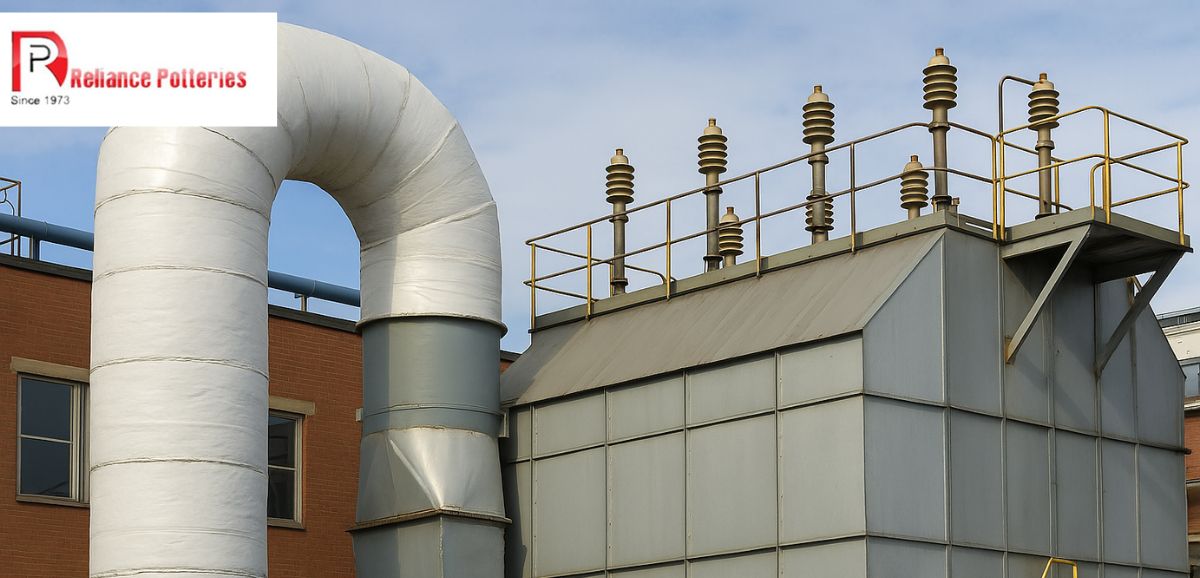
ESP Insulators vs Traditional Insulation for Textile Air Filtration

In the bustling world of the textile manufacturing industry, dyeing, finishing, and printing are responsible for generating a significant amount of airborne pollutants. It is vital to control the air pollution generated by the textile manufacturing industry. To achieve this, the textile industry is focusing on the introduction of functional air filtration systems, such as ESPs or electrostatic precipitators. ESP is a unique air filtration system, but another vital component that supports overall efficiency and mitigates air pollution in the textile industry is the insulation system.

The textile manufacturing industry consistently seeks the best ESP insulator manufacturer to obtain premium-quality ESP insulators. In this blog, we will compare ESP insulators and traditional insulation for textile air filtration, providing necessary feedback on which one is more suitable for operational efficiency in textile mills.

What Do You Understand by ESP Insulators

ESP insulators are a type of high-voltage electrical insulator used in electrostatic precipitators. The design of the ESP insulator is unique, electrically isolating live components from grounded structures while protecting against dust, heat, and corrosive elements commonly found in textile mills. Without an ESP insulator, the ESP cannot generate the electrical fields essential to trap airborne pollutants.

What Do You Mean by Traditional Insulation?

Traditional insulation primarily refers to thermal or electrical barriers derived from materials such as fiberglass, rubber, and mica. Traditional insulation mainly prevents heat loss and controls electrical flow in low- to medium-voltage environments. Conventional insulation systems are not suitable for high-voltage air filtration systems. Traditional insulation is also a crucial component in textile mills, serving to protect high-voltage wires and cables.

Comparison between ESP Insulator and Traditional Insulation

In this segment, we will discuss the significant difference between ESP insulator and traditional insulation.

1. Voltage handling

  • ESP insulator- ESP insulator is mainly helpful for high voltage operation, which is up to 100kV
  • Traditional insulation- Traditional insulation is helpful in managing low- to medium-voltage operations.

2. Application

  • ESP insulators-ESP insulator is particularly useful for air filtration
  • Traditional insulation- Traditional insulation is helpful for general heat and electric control systems

3. Lifespan

  • ESP Insulator- It is long-lasting even in harsh weather conditions
  • Traditional insulation- Traditional insulation tends to degrade faster degradation

4. Functional approach for air filtration

  • ESP insulator- The ESP insulator is integrated with ESP, which is suitable for air filtration
  • Traditional insulation- A traditional insulator, or traditional insulation system, is not suitable for an air filtration system.

Purposes of Choosing ESP Insulators for Textile Air Filtration

If you are planning to choose between ESP insulator and traditional insulator for your textile mills, you must select ESP insulator from a reliable insulator supplier in India for the following reasons: let’s discuss-

1. Support a high-voltage environment

Textile mills primarily use ESP insulators to manage high-voltage operational risks and airborne particulates.

2. Work efficiently in a harsh climate

The textile manufacturing industry primarily operates in a humid, dusty, and chemically laden environment. The design of the ESP insulator is unique, enabling it to withstand harsh weather conditions and making it valuable and durable for the textile industry.

3. Minimise the downtime

If you maintain the ESP insulator properly, it offers a long service life and reduces costly downtime. Reducing maintenance downtime is vital to keeping the air filtration system running smoothly.

Conclusion

When the textile industry plans to control airborne pollutants and maintain operational efficiency, a functional and premium-quality ESP is an essential element. Reliance Potteries is the leading manufacturer and supplier of ESP insulators and traditional insulators for various industrial applications. To ensure the best quality and reliable insulation for your textile mill, please get in touch with us.