
Industrial operations run on a perfect combination of electrical and mechanical instruments. A sudden breakdown of any component can affect the overall performance of an industrial operation. Electrical insulators are vital industrial equipment that may not be as visible as transformers, switchgear, generators, or other major equipment, but their reliable performance helps industrial units run efficiently.
Providing electrical isolation, supporting energized components, and helping electrical components operate smoothly are mainly the core responsibilities of insulators. That’s why insulator specifications matter for industrial equipment performance.
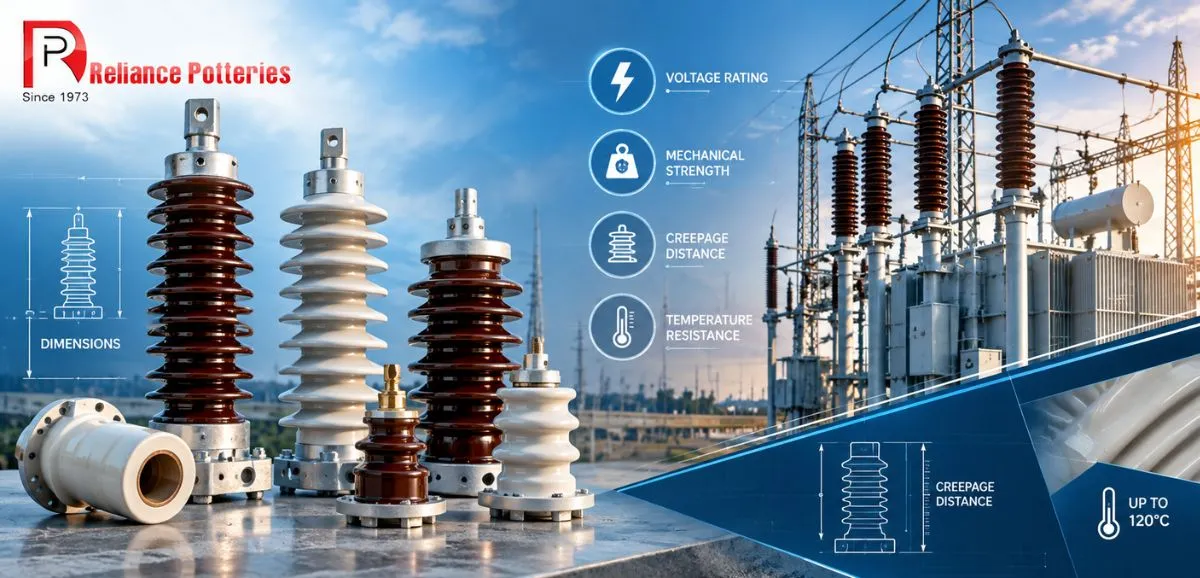
When you decide to buy top-quality insulators from a top porcelain insulator manufacturer in India, checking the voltage rating, dimensions, material quality, creepage, temperature resistance, and mechanical strength is vital to match your specific industrial needs.
Let’s discuss in this blog how insulator specifications affect industrial equipment performance.
If you want to know how insulator specifications affect industrial equipment performance, you must read this section.
Voltage is one of the first specifications that engineers consider when selecting an insulator. An efficient insulator must have the appropriate voltage rating for the application. Selecting an insulator without considering its voltage can cause massive electrical damage later.
The equipment must have the proper insulation level, application-specific electrical conditions, rated system voltage, relevant standards, and testing requirements. This means insulators should be selected according to the electrical system.
The insulator material influences its electrical, mechanical, and thermal performance. Porcelain is one of the most important insulator materials because of its electrical insulating properties, mechanical strength, and durability. When you decide to buy insulators for your industrial application, thinking about the actual operating environment is essential.
An excellent insulator has the proper dimensions and fits perfectly with the electrical equipment. Insulator dimensions may influence mounting compatibility, mechanical support, equipment layout, and electrical clearance.
Dimension checking is essential when replacing an existing component or developing a new electrical system. Differences in height, diameter, mounting arrangement, hole position, and overall geometry are essential factors for insulators. That’s why you must set accurate drawings and dimensional requirements when deciding to buy an insulator.
Creepage distance refers to the distance along the surface of insulating materials at different electrical potentials. As moisture, dust, and other environmental conditions influence insulator performance, considering creepage distance is essential.
As the manufacturing process is exposed to electrical equipment, dust, pollution, and humidity, the required creepage characteristics should therefore be considered as per the environmental conditions. It indicates that electrical insulation requirements should be considered together with the environment in which the equipment will operate.
An insulator is not only an insulating material for industrial equipment. In many applications, it provides mechanical support. Depending on the industrial equipment application, insulators can be exposed to mechanical loads, vibration, conductor forces, thermal expansion, operational forces, and installation stress.
If the mechanical features of the insulator do not match the industrial equipment application, the insulators may not provide the expected level of support. These features are essential for industrial equipment, where electrical components must remain in a secure position throughout operation.
Industrial equipment mainly operates under excessive heat and stress. Transformers, generators, ESP systems, and power station switchgear may operate under extreme temperatures. That’s why temperature specification is a vital aspect for an insulator, along with material and design.
For example, reliable Wall-Through Bushings for ESP are designed to operate at around 250°C, while transformer bushings can withstand up to 350°C. This indicates that different insulators must have different temperature ratings to operate under different circumstances.
Every electrical system has its own requirement. When you choose an insulator for different industrial applications, insulator specification is vital. At Reliance Potteries, you can access a customized range of insulation specifications that work efficiently for all types of industrial applications.