
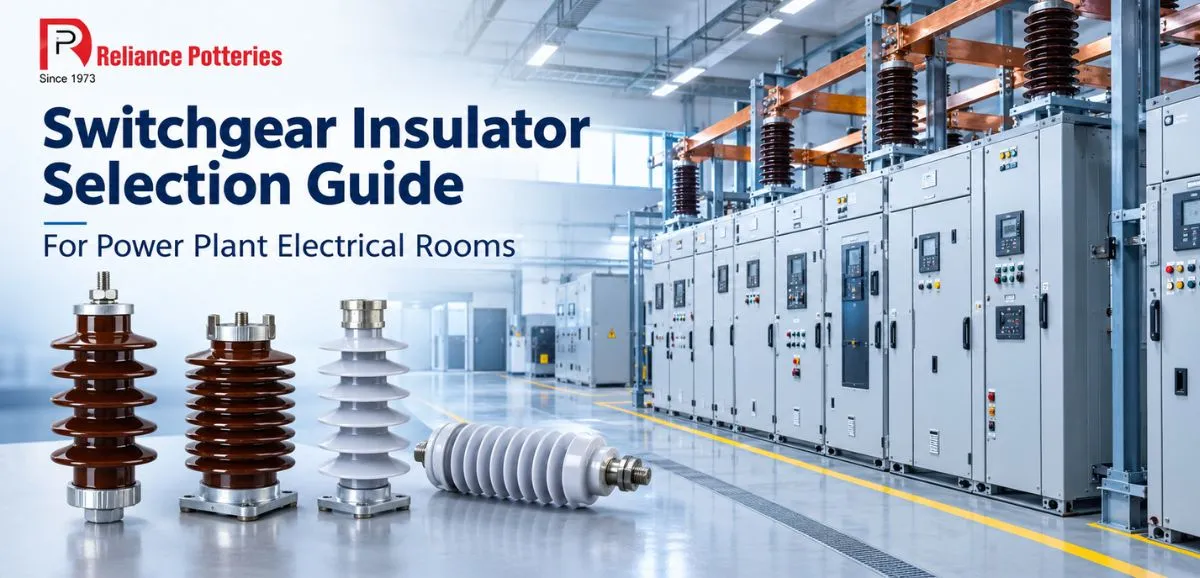
Inside a power plant, reliability doesn’t depend on a single piece of equipment. It relies on a proper combination of multiple mechanical components. Among these instruments, switchgear insulators are among the most vital components.
Engineers may not think about switchgear quality in the initial stage; however, it plays a fundamental role. The right switchgear insulator maintains electrical isolation while supporting the mechanical and environmental demands of the industrial unit.
For power plants and heavy-duty industrial plants, choosing a trusted insulator manufacturer in India should be more than a price-based purchase. Industrial unit procurement teams need to discuss voltage requirements, mechanical loads, material quality, dimensions, application specifications, and environmental conditions with insulator manufacturers.
In this blog, we will discuss a switchgear insulator selection guide for a power plant electrical room.
Switchgear insulators are important insulating components used within electrical equipment to provide necessary electrical isolation while supporting conductive parts. In industrial applications, switchgear insulators work alongside switchgear, transformers, and generators.
Inside a power plant electrical room, electrical components are mainly exposed to high voltage, mechanical stress, temperature variations, moisture, and continuous operating demand. That’s why selecting insulation according to the actual mechanical requirement is essential.
When selecting switchgear insulators for a power plant electrical room, you must consider a few factors; let’s discuss them in detail-
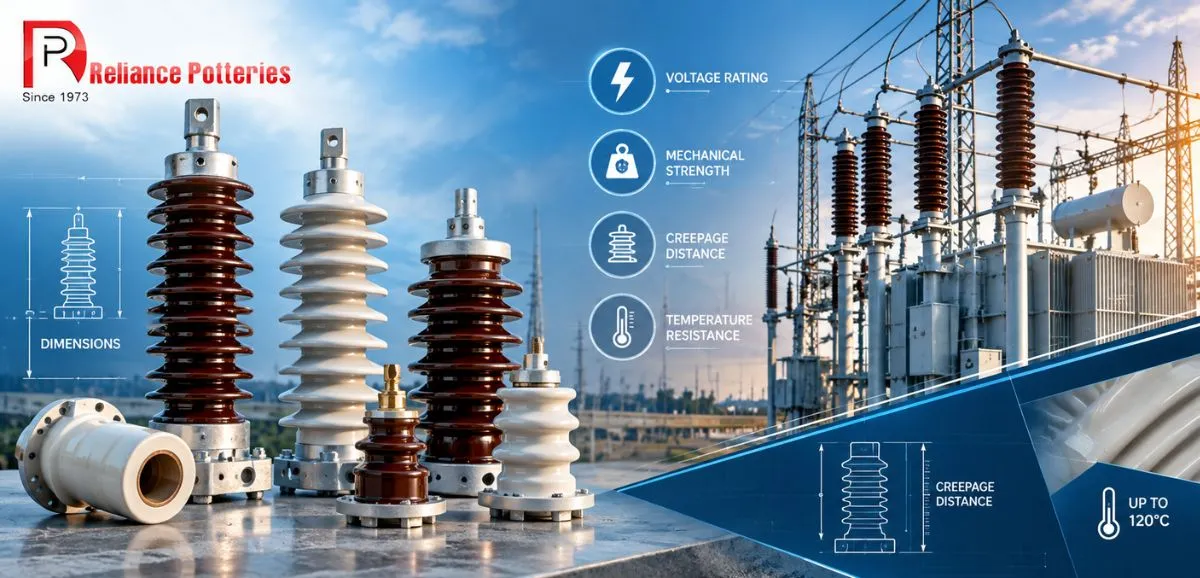
Voltage rating may be the first specification you should consider when selecting industrial insulators. The insulators must match the electrical requirements. Before approaching a manufacturer, the industrial procurement team must have a clear idea of the relevant voltage configuration and equipment specifications.
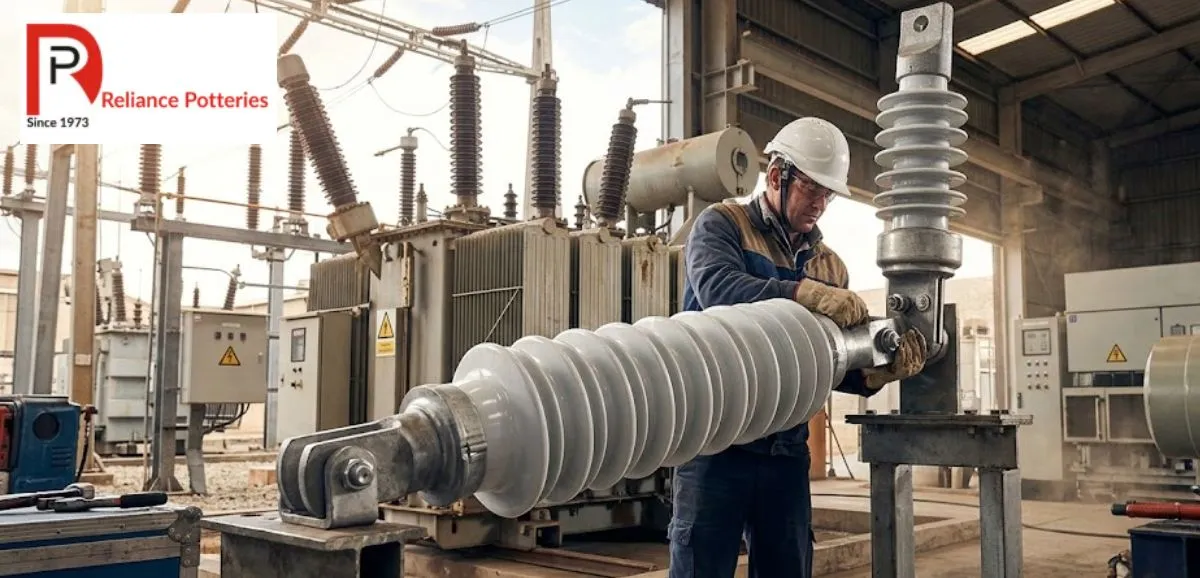
Insulators may need to withstand mechanical forces generated by equipment use and operating conditions. Depending on the application category, engineers may need to consider several factors, such as mechanical loading, mounting arrangement, vibration, dimensions, and metal insert requirements.
This is particularly important for heavy-duty industrial applications where components need to integrate properly.
Porcelain is a useful material for durable electrical insulators and provides stability for electrical equipment. However, depending on the application, epoxy is also considered a reliable insulator material. The appropriate choice of insulator material depends on equipment design, mechanical strength, and environmental conditions.
Electrical insulators can meet electrical requirements, but they cannot work well if the dimensions do not match the electrical equipment. Thus, before placing an order, verifying certain details about insulators is essential-
That’s why customized switchgear insulators are essential for smooth industrial operational flow. Customized switchgear industrial insulators can meet specific industrial demands with accurate shape, proper dimensions, and exact voltage configuration.
Power plant electrical rooms are controlled under specific environments; therefore, it is vital to consider specific factors for insulators when designing for the electrical room environment.
These factors may influence component selection alongside the electrical and mechanical specifications. For specific industrial applications, it is vital to discuss the electrical room environmental conditions with the manufacturer before finalizing the insulator design.
For many industrial applications, insulators do not work as isolated ceramic components. They may need to work with other components through metal inserts. The insert design, dimensions, and mounting arrangement should be a vital aspect. That’s why Trusted Wall Through Bushing Manufacturers in India specifically list metal inserts among the other features available for industrial switchgear insulators.
For a power plant electrical room, choosing the right switchgear insulators is vital for smooth operational efficiency. If you are looking for a trusted switchgear industrial insulators manufacturer, Reliance Potteries can work with your technical specifications and develop a customized insulator solution. You can contact us through our website to discuss your needs.